
What Type of Alcohol is Brandy?
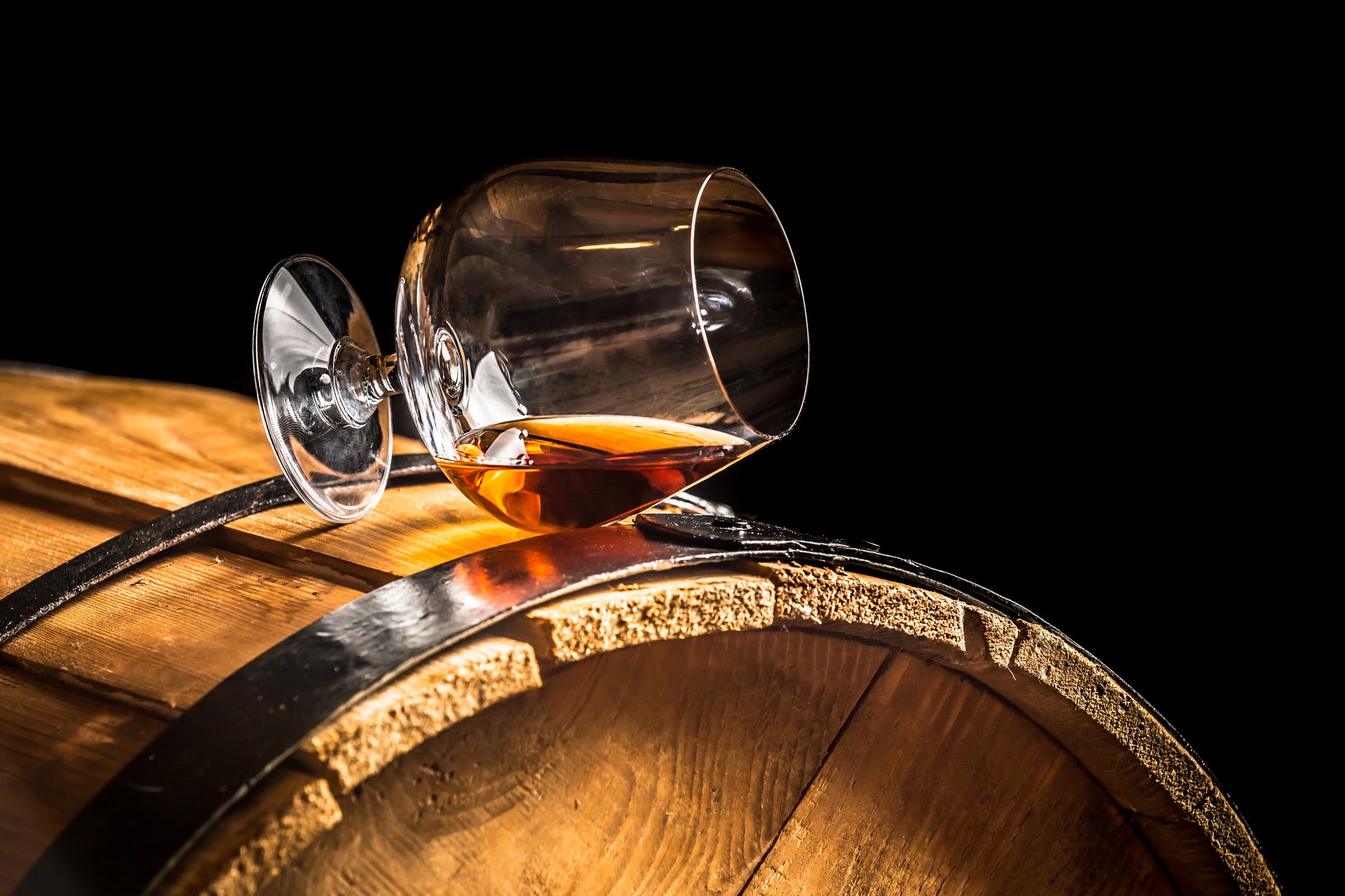
Brandy is a distilled spirit made from fermented fruit juice, typically grapes. The word “brandy” comes from the Dutch word “brandewijn,” which means “burnt wine,” referring to the heat applied during the distillation process. Unlike wine, brandy is distilled, most often twice but not always, which concentrates the alcohol and the aromatic compounds that then develop during ageing in wooden casks. The result is a smooth, aromatic spirit enjoyed worldwide.
What is Brandy Made From?
Brandy is made from fruit. In practice that almost always means grapes, and it means the fermented juice of those grapes rather than the fruit itself. Wine is made first, and the brandy is distilled from the wine.
Australian law puts it plainly. Standard 2.7.5 of the Australia New Zealand Food Standards Code defines brandy as "a spirit obtained from the distillation of wine, or fermented preparations of grapes or grape product", and allows water, sugars, honey, spices, grape juice, grape juice concentrates, wine and prune juice to be added during production. The same standard requires anything sold as a spirit in Australia to be at least 37 per cent alcohol by volume.
European law, which governs most of the imported bottles on the shelf, is stricter again. Regulation (EU) 2019/787 defines brandy in Annex I, category 5. It must be produced from wine spirit, it must be matured for at least one year in oak receptacles of 1,000 litres or more, or at least six months in oak casks smaller than that, no alcohol may be added, and it must be at least 36 per cent alcohol by volume. The definition of wine spirit in category 4 requires distillation of wine at less than 86 per cent alcohol.
Two things worth taking from that. First, brandy has to spend time in oak: a grape distillate that has not been aged is not brandy in the European sense, it is wine spirit or an eau-de-vie. Second, where the fruit is not a grape the legal name usually changes, and the word brandy is used loosely rather than legally.
What are the Types of Brandy?
Brandy comes in various styles and types, each with unique characteristics. Here are some of the most popular types of brandy:
1. Cognac
Cognac is perhaps the most well-known type of brandy. It must be produced in the Cognac region of France and adhere to strict production regulations. Cognac is double-distilled in copper pot stills and aged in French oak barrels, resulting in a rich, complex flavour profile.
2. Armagnac
Armagnac is another French brandy, hailing from the Armagnac region in Gascony. Unlike Cognac, it is typically distilled only once using column stills, which gives it a fuller, more robust flavour. Armagnac is also aged in oak barrels, often resulting in a more rustic and earthy taste.
3. Calvados
Calvados is an apple brandy from the Normandy region of France. It is made by fermenting apple cider and then distilling it. Calvados is aged in oak barrels, where it develops a smooth, fruity flavour with notes of apple, pear, and spice.
4. Pisco
Pisco is a South American brandy produced in Peru and Chile. Made from fermented grape juice, Pisco is distilled in copper pot stills and typically not aged in wood, preserving its fresh, fruity character.
5. Fruit Brandy (Eau-de-Vie)
Fruit brandies, or eaux-de-vie, are made from various fruits other than grapes, such as apples, pears, plums, and cherries. These brandies are typically clear and unaged, showcasing the pure essence of the fruit from which they are made.
6. Grappa and Marc
Grappa is distilled from grape marc, the skins, pips and stalks left after pressing, rather than from wine. Under Regulation (EU) 2019/787 that is a separate category, number 6, grape marc spirit, with a minimum of 37.5 per cent alcohol by volume, and the first distillation has to happen in the presence of the marc itself. It is not brandy under the European definition, but it comes from the same vineyard and answers to the same question, which is what to do with the rest of the grape. Our guide to grappa covers it properly.
7. Australian Apple Brandy
Australia makes apple brandy too, and Tasmania is where most of it comes from. Willie Smith's Tasmanian Apple Brandy at 42 per cent is distilled by a cider maker in the Huon Valley, and Lobo Apple Brandy is the other one to know. Neither is a calvados, because that name belongs to Normandy, but they sit in the same part of the shelf.
What Does Brandy Taste Like?
Brandy’s flavour profile can vary significantly depending on its type, age, and production method. However, some common tasting notes include:
• Fruity: Brandy often has prominent fruity notes, including flavours of dried fruits, apples, pears, and citrus.
• Spicy: Aging in oak barrels can impart spicy notes of vanilla, cinnamon, nutmeg, and cloves.
• Nutty: Some brandies, especially those aged for longer periods, develop nutty flavours like almond and hazelnut.
• Floral: Lighter brandies may have subtle floral notes, such as rose or jasmine.
• Caramel and Toffee: Longer-aged brandies can develop rich, sweet notes of caramel, toffee, and butterscotch.
• Woody: Oak aging also contributes woody notes, including hints of oak, cedar, and tobacco.
Is Brandy Sweet?
Mostly no, and the amount of sweetness that is allowed is a number rather than a matter of opinion.
Regulation (EU) 2019/787 permits brandy to be sweetened "in order to round off the final taste", but caps it at 35 grams of sweetening products per litre, expressed as invert sugar. For comparison, the same regulation sets a floor of 100 grams per litre before a drink may be called a liqueur, and requires more than 400 grams per litre for a creme de cassis. So a brandy sits far below the sweetness of anything in the liqueur aisle, and most sit well below even the 35 gram ceiling.
The regulation is equally clear about what else may go in. Brandy may not be flavoured, no alcohol may be added to it, and the only permitted colouring is caramel. Grape marc spirit and wine spirit are capped lower again, at 20 grams of sweetening per litre, and fruit spirit at 18 grams.
What people are usually picking up when they call a brandy sweet is not sugar. It is the fruit character that survives distillation, plus the vanilla and caramel the oak contributes over years in cask. An older brandy often reads sweeter than a young one for that reason, without containing more sugar.
The exception is the cherry brandy or apricot brandy on the liqueur shelf. Despite the name, those are liqueurs rather than brandies, and they are genuinely sweet. The line is the sugar: European law requires at least 100 grams per litre before a drink may be called a liqueur, roughly three times what a brandy may carry.
Is Whiskey a Brandy?
No, whiskey is not a brandy. While both are distilled spirits, they differ significantly in their ingredients and production processes. Whiskey is made from fermented grain mash, including barley, corn, rye, and wheat, and is aged in wooden casks. In contrast, brandy is made from fermented fruit juice, typically grapes, and also aged in wooden casks. These differences result in distinct flavour profiles and characteristics for each spirit.
Why Do People Drink Brandy?
People enjoy drinking brandy for several reasons:
1. Complex Flavours: Brandy offers a rich and diverse range of flavours, from fruity and floral to spicy and woody, making it a versatile and interesting spirit to explore.
2. Aromatic Experience: The aging process in oak barrels enhances brandy’s aromatic qualities, making it a pleasure to smell as well as taste.
3. Versatility: Brandy can be enjoyed neat, on the rocks, or as an ingredient in a variety of cocktails, offering versatility for different occasions and preferences.
4. Cultural and Historical Significance: Brandy has a long history and cultural significance in many regions, adding to its allure and appeal.
5. A Place at the End of a Meal: Brandy has long been served at the end of a meal, which is where most of its serving rituals, glassware and food pairings come from.
How Do You Drink Brandy?
Neat, at room temperature, in a glass that narrows at the top. That is the whole answer, and everything else is a refinement of it.
The glass. A tulip or copita gathers the aroma. The wide balloon snifter is the famous shape and the least useful one, because it spreads the liquid out and lets the alcohol dominate. A small wine glass beats a balloon.
The temperature. Do not warm it. Heating a brandy over a flame, which the balloon glass was designed for, pushes the alcohol forward and flattens the fruit underneath. The warmth of your hand around the bowl is as much as it needs.
The measure. A small pour, and give it a minute in the glass before you go near it. In Australia one standard drink is 30 ml of a 40 per cent spirit, so a generous pour of a 45 per cent brandy is more than one, and worth measuring rather than guessing.
Water and ice. A few drops of water open up an older, higher strength brandy. Ice works better with younger ones. Neither is a mistake.
With something long. Brandy and dry ginger ale is the Australian standard, and it suits a young brandy that would be lost neat. Brandy and soda with a slice of lemon does the same job with less sweetness.
In cocktails. The Sidecar is brandy, orange liqueur and lemon, and it is the one to learn first. The Brandy Alexander adds cream and cacao. A Pisco Sour uses the South American branch of the family, and our pisco guide covers how that differs.
When to Drink Brandy
Brandy can be enjoyed in various settings and occasions, each offering a unique experience:
1. After Dinner: Brandy is traditionally served as an after-dinner drink or digestif. Its warming qualities and complex flavours make it a perfect way to end a meal.
2. Special Occasions: High-quality brandies, such as Cognac and Armagnac, are often reserved for special occasions and celebrations due to their premium nature and price.
3. In Cocktails: Brandy is a key ingredient in many classic cocktails, such as the Sidecar, the Brandy Alexander and the Brandy Crusta. These cocktails can be enjoyed at any time, whether at a bar or home.
4. Relaxation: A glass of brandy can be a great way to unwind and relax after a long day, either neat or with a splash of water or ice.
5. Pairing with Food: Brandy can be paired with a variety of foods, including cheeses, chocolates, and desserts, enhancing the dining experience with complementary flavours.
Brandy Beyond France
France dominates the conversation, but brandy is made everywhere wine is made, and the non-French versions are different enough to be worth knowing.
Spain. Brandy de Jerez is the best known, and it is made only in the municipalities of Jerez de la Frontera, El Puerto de Santa Maria and Sanlucar de Barrameda. Its Consejo Regulador states that it is aged in American oak butts of around 500 litres which must first have held Sherry for a minimum of three years, using the criaderas y soleras system, where casks of different ages are drawn from and refilled in sequence rather than a single cask being bottled on its own. The regulator classifies it by the proportion of holandas, the lower strength, more aromatic spirit, in the blend: Brandy de Jerez Solera at 50 per cent holandas, Solera Reserva at 75 per cent, and Gran Reserva at 100 per cent. The sherry casks are why Spanish brandy reads darker, rounder and more raisined than a cognac of similar age. Our sherry guide explains what those casks held first.
Italy. Italy makes a grape brandy of its own, but its real contribution is grappa, distilled from the marc rather than from wine, and covered in section 6 above.
Peru and Chile. Pisco is the South American branch and the one most unlike the others, because the Peruvian versions are bottled without wood contact. That makes pisco the clearest picture of what a grape distillate tastes like before oak gets involved, which is the most useful comparison you can make if you want to understand what ageing does. Macchu Pisco at 40 per cent is the way in.
Australia. The local contribution is apple rather than grape, and it comes mostly from Tasmania. See section 7 above.
What Brandy Should I buy?
After reading above, you'll likely have a hunch about which Brandy you're leaning toward. So now which exact bottle should you buy? Here is an entry level, and high end version of each type of Brandy we have discussed that we recommend.
Cognac:
Entry Level - Paul Giraud Cognac VSOP 8 years Grande Champagne 40% 700ml
Top End - Francois Voyer XO Gold 20-30 years Grande Champagne Cognac 40% 500ml
Armagnac:
Entry Level - Delord XO 10 years Bas Armagnac 40% 700ml
Top End - Delord 1973 Bas Armagnac 40% 700ml
Calvados:
Entry Level - Christian Drouin Sélection Calvados 40% 700ml
Top End - Christian Drouin Hors D’Age Calvados Pays d’Auge 42% 700ml
Pisco:
Entry Level - Macchu Pisco Pisco 40% 700ml
Top End - Pisco Ultra Premium Black Heron 43.5% 700ml
Australian Apple Brandy:
Entry Level - Lobo Apple Brandy 41.6% 700ml
Top End - Willie Smith's Tasmanian Apple Brandy 42% 700ml
Eau de Vie:
Entry Level - Wolfberger Eau-de-Vie Poire William (Williams Pear) 45% 700ml
Top End - Chateau Arton Les Reserves Poire (Pear) Eau de Vie 42% 700ml
Conclusion
Brandy is a timeless and versatile spirit that offers a rich tapestry of flavours and aromas. Whether you prefer the refined elegance of Cognac, the robust character of Armagnac, or the fruity freshness of Calvados, there is a brandy for every palate and occasion. Explore the diverse world of brandy and discover why this classic spirit continues to captivate and delight drinkers worldwide. Visit Liquor Wine Cave to find the perfect bottle of brandy to suit your taste and enhance your collection. The full range sits on our Brandy page, and we deliver to every Australian state and the ACT.