
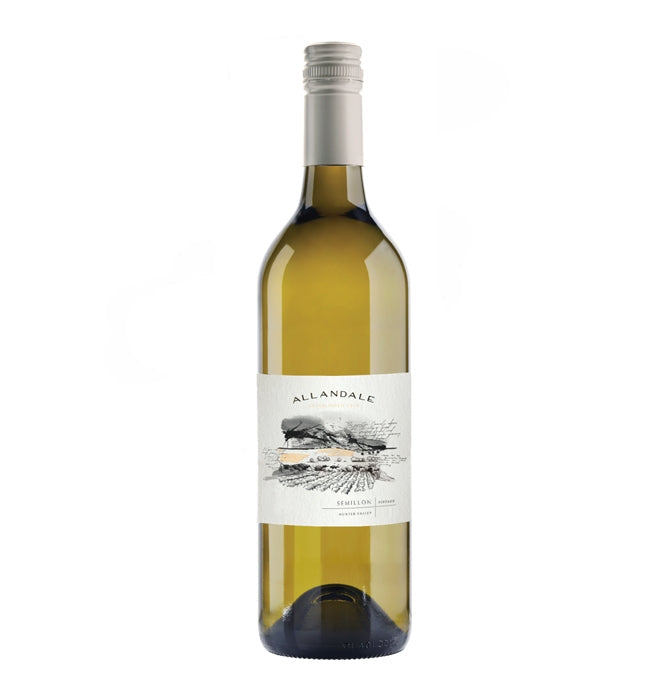
Allandale Winery Semillon 2023
About Semillon
Semillon is one of the few white grapes that makes a serious wine at low alcohol, and the Hunter Valley in New South Wales is the one region on earth that treats it as a flagship dry white. Allandale Winery Semillon 2023 is that wine here. Hunter Semillon is picked early, fermented cool, kept away from oak and bottled within months of vintage, which is why a young one smells of lemon zest, cut grass and not much else. That restraint is deliberate. Given five to ten years in bottle the same wine develops toast, honey and a waxy lanolin note without ever having seen a barrel, and the alcohol stays low enough that a bottle over lunch is no great commitment. The grape has a second life in Bordeaux, where it is the majority partner in Sauternes and Barsac, and Chateau Jeannonier Sauternes 2018 shows what botrytis does to the same variety. If you like the shape of the Hunter wine, the same early picked, unoaked logic runs through Australian dry Riesling, so Pooley Cooinda Vale Riesling from Tasmania is a fair next bottle. The rest of the local range sits in Australian wines, and the wider white shelf in white wines.
History
Semillon comes from Bordeaux, where it has been recorded since the eighteenth century and where it remains the majority partner in the great sweet wines of Sauternes and Barsac. Its thin skin is prone to botrytis, the noble rot that shrivels berries and concentrates sugar and acid together, and in dry Pessac Leognan it is usually blended with Sauvignon Blanc, which supplies the aromatic lift Semillon lacks on its own. Cuttings reached New South Wales with the earliest colonial vine collections in the 1830s, and in the Hunter Valley growers found something nobody planned. The subtropical summer brings rain around harvest, so fruit had to come off early at low sugar, giving a wine of about ten to eleven percent alcohol with searing acidity and almost no flavour to speak of when young. For most of the twentieth century it was sold as Hunter River Riesling or White Burgundy, names that had nothing to do with either grape and were finally dropped under labelling reform. What changed the style most was closure. Screwcaps became standard on Australian whites from the early 2000s, and the tight, oxygen free seal suited a wine designed to age slowly for a decade. The Barossa also holds very old Semillon plantings, often richer and traditionally barrel fermented. Taste a Hunter bottle against a Sauvignon Blanc and the division of labour in a Bordeaux blend makes immediate sense.
How to drink it
Young Semillon wants to be cold, around 8 to 10 degrees, in an ordinary white wine glass. Aged bottles are different, so pull them out of the fridge fifteen minutes before pouring and use a wider bowl, because the toast and honey aromas need warmth and air to show. On the table, young Hunter Semillon is one of the great seafood wines. Oysters, prawns, whiting, fish and chips with lemon, plus goat cheese, chicken salad and anything you would otherwise squeeze a lemon over. Aged Semillon handles more, including roast chicken, pork with apple, smoked trout and hard cheeses. Barrel fermented styles sit somewhere between the two and suit grilled fish with butter. A screwcapped bottle keeps three to four days in the fridge once opened, longer than most whites, because the low alcohol and high acid do the preserving. If you buy a case of a young vintage, drink a bottle now and put the rest away, then try one each year, since the change from lemon to toast usually happens somewhere between years five and eight rather than gradually. Start with Allandale Semillon 2023, then move sideways into Chardonnay to see what oak and richer fruit change in a dry white.