
Falernum turns up in cocktail recipes far more often than it turns up in conversation, and most people meet it for the first time halfway through building a Zombie. This guide covers what it is, where it comes from, why there are two different things sold under the same name, and what to make with it.
What falernum is
Falernum is a sweetened lime and almond flavouring from Barbados. It is the ingredient that gives Caribbean and tiki drinks their particular soft, nutty, citrus-peel character, and it does a job nothing else quite does: it sweetens and it flavours at the same time, so a drink built with falernum tastes rounder than the same drink built with plain sugar syrup and a squeeze of lime.
It is Barbadian in origin, which is the single most useful thing to know about it. Falernum belongs to the same island as the rum it is usually poured beside, and the classic Barbadian way to drink it is with Barbadian rum.
Liqueur or syrup: the distinction that matters
Two quite different products are sold as falernum, and recipes rarely tell you which one they mean.
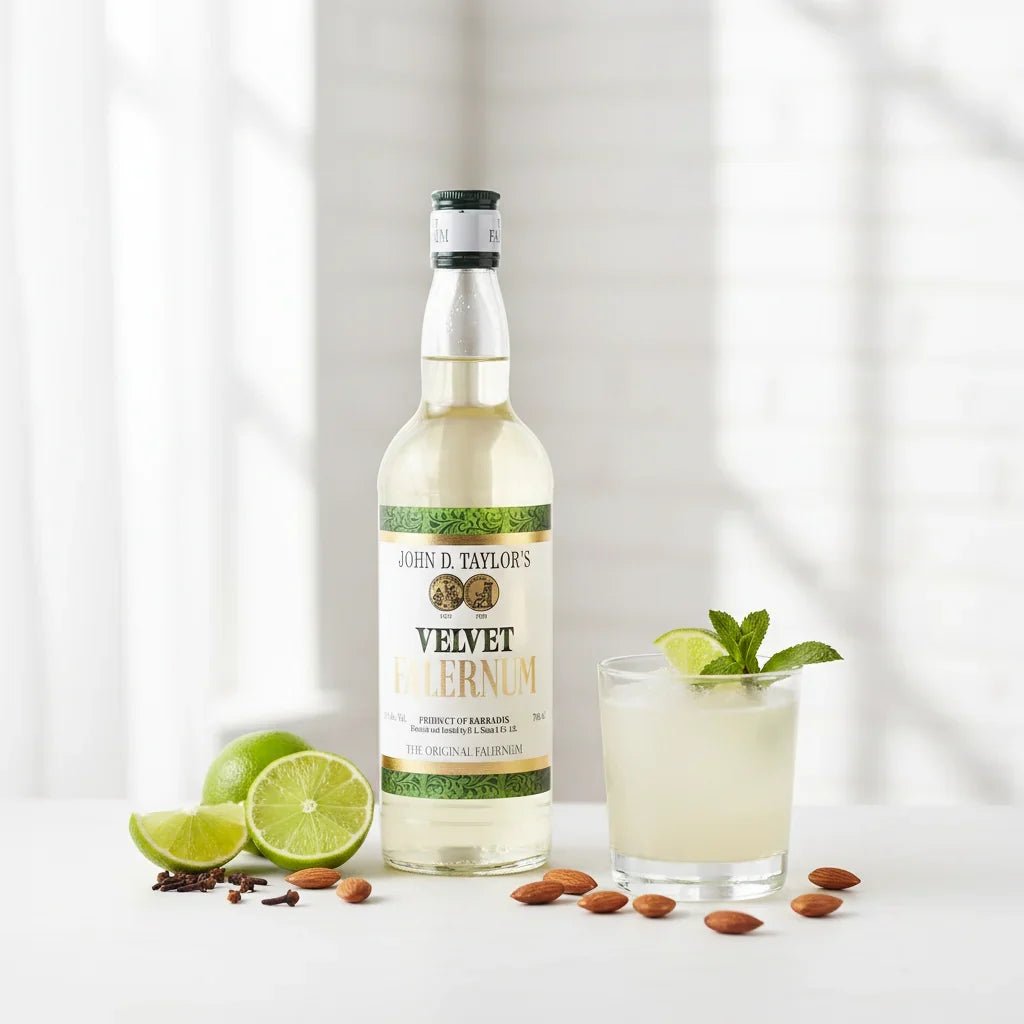
- Falernum liqueur contains alcohol. John D. Taylor's Velvet Falernum is the reference bottle, made by R.L. Seale and Company in Barbados at 11 per cent alcohol by volume.
- Falernum syrup contains no alcohol. It is a flavoured sugar syrup, sold by a number of makers and often made at home.
They are not interchangeable in a measuring jigger. The liqueur brings a little alcohol and a drier, more restrained sweetness; the syrup is sweeter and thicker for the same volume. If a recipe was written around the liqueur and you pour syrup, the drink will usually come out sweeter and softer than intended, and the other way round it will come out sharper. Neither result is wrong, but it helps to know which way you are pushing the drink before you decide the recipe is at fault.
Because the liqueur is bottled at 11 per cent, it also behaves differently in storage. Treat an opened bottle the way you would a vermouth or a fortified wine rather than a spirit: keep it cool, keep it closed, and use it within a few months rather than leaving it open at the back of the shelf for a year.
What it tastes of
Lime and almond are the two flavours doing the work. The lime reads as peel and zest rather than as fresh juice, so it lifts a drink without adding sourness, and the almond gives it the marzipan-adjacent softness that makes falernum recognisable the moment you taste it in a mixed drink. Recipes and producers vary in what else goes in, so treat lime and almond as the core and anything beyond that as house style.
Three drinks to make with it
Corn 'n' Oil
The Barbadian one, and the drink most worth learning first because it puts falernum at the centre rather than in the supporting cast. Aged Barbados rum, Velvet Falernum, fresh lime juice and a few dashes of Angostura, stirred over crushed ice and garnished with lime.
The proportions are genuinely contested. Bajan versions lean generously on the falernum, while American bar versions tend to lead with the rum and use falernum as a sweetener. Both are legitimate. Build it once each way and keep the one you prefer.
Zombie
The long tiki drink, and the one most people are holding a bottle of falernum for. It is built from several rums with citrus, and falernum is one of the sweetening and flavouring elements that stops the whole thing from tasting like a fruit punch. If you have ever wondered why a Zombie made at home tasted flat, a missing or substituted falernum is a common reason.
Test Pilot
A shorter, sharper relative of the Zombie, again built on rum with citrus and falernum. It is a good drink for tasting what falernum actually contributes, because there is less going on around it than in a Zombie.
What to buy it with
Falernum was made to sit beside Barbados rum, so that is the obvious place to start. The Barbados rum range covers the island's aged bottlings, which are what a Corn 'n' Oil is written around, and the wider rum range covers the Jamaican and Demerara styles a Zombie draws on.
One bottle goes a long way. Falernum is measured in bar spoons and quarter ounces rather than in shots, so it earns its place on a home bar without needing to be replaced often.